Wednesday, March 22, 2006

Psychoanalysis Meets the Inner City


Big up to Roots and Wires Hi-Fi selector Andy G for a wicked set of UK Roots - make sure you check it out (see the link below)!

This saturday, March 25th, Six Degrees Records and Roots and Wires Hi-Fi bring you the third round of Stateless. I'll be out of town, so won't be dropping my dubwise antics, but the lineup looks stellar:

MC Rai performing live with Jef Stott (Embarka Records) and Omar Fadel...

Guest dj's from Chicago's 'Bombay Beatbox' crew: Warp and Radiohiro

and a dj set from resident dj, D. Wurker

"Psychoanalysis Meets the Inner City," refers to a UCSF Department of Psychiatry event I've organized. This thursday, March 23rd, there will be a special two-part presentation and clinical case conference at the San Francisco General Hospital - "Psychoanalysis Meets the Inner City." Neil Altman, author of "The Analyst in the Inner City: Race, Class and Culture Through a Psychoanalytic Lens," and co-editor of "Psychoanalytic Dialogues: a Journal of Relational Perspectives" (a major journal for contemporary psychoanalysis), will be visiting from New York City to speak on the value of modern psychoanalytic perspectives in public-sector work. The lunch and evening events will be open to providers and trainees throughout the city, so send me an e-mail @ bruceleehifi@hotmail.com if you're interested in checking it out...

The emphasis will be on the value of contemporary psychoanalysis in inner city work - let me paraphrase some perspectives from Dr. Altman's book:

Classical psychoanalysis emphasized the need for analytic anonymity and abstention from action, which isn't really possible in most public sector settings where there are multiple domains in which the therapist needs to be more active. For example, the therapist often also provides active case-management functions such as working towards housing and government entitlements (such as SSI). These far from neutral actions would have been considered incompatible with a classical psychoanalytic approach, but are not incompatible when the analyst's subjectivity and presence are acknowledged and revisioned in the contemporary, relational psychoanalytic frame.

The classical criteria for "analyzability" often excluded most patients served in the public sector, since there was an emphasis on the capacity to tolerate frustration and on verbal intelligence. Relational or intersubjective psychoanalysis, focuses more on the capacity to utilize relationship, so this opens up new and less exclusionary possibilities for "analyzability."

In intensive case management programs, case managers often visit patients in their environment, which can intensely pull for enactments of object-relations related to early attachment figures. Thus "case managers may appear to their patients as omnipotent rescuers, controlling and punitive intruders, potential rapists, lovers, friends and so on." Contemporary psychoanalytic perspectives can help make sense of these enactments and the various countertransference/transference manifestations that can arise. This is one example in which these perspectives are useful clinically in the public sector, even outside of psychoanalytically informed individual psychotherapy...

Classical psychoanalysis has been described as a "one-person psychology," where the analyst was a considered a blank slate for the patient's transference projections. This gradually developed into what has been referred to as a "two-person psychology," where the analyst is acknowledged as a subjective being with his own presence in the relational field. Finally, in a "three-person psychology, " the "third," refers to the systems and sociocultural context in which the therapeutic dyad is embedded, allowing us to more reflexively take into account things such as race, class, and subculture/culture...

... As I write this a Heptones song ("World") comes to mind, bringing us back to roots music:

World, for everyone…
But somethings are shared only by some…

... And we'll leave this post with some words, a fitting invition of sorts, from Aswad ("Pass the Cup"):

And yes my friend I know it's not hard to see,
What's good for you is so good for me...
Pass the cup,
Pass the cup,
You let it touch your very very soul,
Pass the cup I beg you, pass the cup around from one to another...

Tuesday, March 21, 2006

Respect to all who listened. Here is the play list and the link for those interested in a stream. Should be up for about two weeks. I'll try to get it permanent on my site.

Respect the UK roots legacy...everytime...

http://archive.kpft.org

Just scroll down to "Music Beyond Borders: Tuesday, March 21, 2006, 4 am" and forward the roots...

1) Groundation – Juggernaut
2) Bagga Matumbi – Daughters of Zion/Version
3) Aswad – Its Not Our Wish (Disco)
4) Reggae Regular – Black Star Liner (Disco)
5) Black Slate – Live Up to Love (Disco)
6) Delroy Washington – Cool Dubbin
7) Human Cargo – Carry us Beyond (Shaka Cut)
8) Mystery UK – Kunte Kinte Dubplate
9) Ras Imhru Asher – Cali Bird (Disco)
10) 4th St. Orchestra – Half Way to Za-Ion
11) Matumbi – Jah Movement
12) Pablo Gad – Reggae Music
13) Danny Henry – African Gold
14) Dambala – Zimbabwe
15) Misty in Roots – Earth
16) Misty in Roots – Zapata
17) Johnny Clarke and Dub Band – Guidance
18) Black Slate – Live a Life (Disco)
19) Junior Brown – Jah Find Babylon Guilty
20) Sons of Jah – Psalm 72 (w/Ranking Rueben)
21) Aswad Dub Charge
22) Alan Kingpin – Little Jimmy

Andy G
Roots and Wires Hi-Fi

Sunday, March 19, 2006

Roots and Wires Presents Classic UK Selections


Roots and Wires Hi-Fi Presents Classic UK Selections:

Once again, another installment of Roots and Wires on the radio will hit the FM airwaves and the internet audio streams. This Tuesday, 21 March 2006 I will be presenting a two-hour special consisting of 100% ever green roots and culture classics culled from the late 1970s/early 1980s UK reggae scene. Rare sides from the likes of Pablo Gad, Aswad, Black Slate, Capital Letters, Matumbi, Misty in Roots, Delroy Washington, and Sword of Jah Mouth will be the order of the day.

The prevailing opinion amongst the majority of reggae aficionados is that singers and players from the UK never quite hit the high water mark that their Jamaican counterparts did during the so-called “golden era” of roots reggae’s global ascent. When I first heard Aswad’s “New Chapter of Dub” and its vocal companion “A New Chapter” back in the 1980s my ears told me otherwise. Since that point, I have been on the constant hunt for UK roots productions from this era.

Nearly twenty years on, I hope this two-hour radio foray into all things UK roots reggae dispels some of the myths that the only good drum and bass comes from JA.

Musical pleasure without measure...True

You can tune in live from 4 to 6 AM Central Time on 90.1 FM KPFT Houston or stream it 24/7 by visiting this link and scrolling down to “Music Beyond Boarders Tuesday, March 21, 2006 4:00 am”

Friday, March 03, 2006

Stateless - 2/24/06 - Photos and Audio!

Announcement:

The third installment of Stateless Version 2 comes to you 3/25/06 (again on a saturday). We are a featured act in the Third Annual Dhamaal Sights and Sounds Festival. I will be away for the weekend but the lineup looks stellar:

DJ Tomas Palermo, DJ Warp and Radiohiro (from Chicago), DJ D. Wurker

and as the live act: MC Rai w/ Jef Stott and additional percussionist (with kit drum set up)

Back to the blog posting...


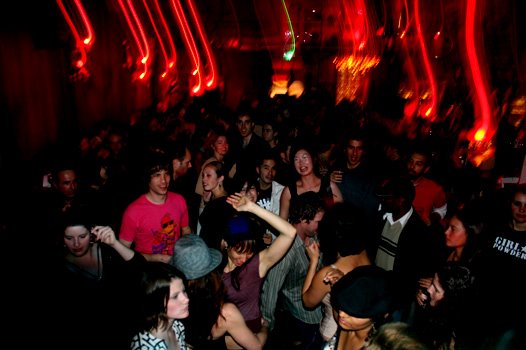
Yes Yes Bredren! Another wicked round of Stateless has come and gone. Thanks to all that showed up for a night of diverse sounds...

(1) special agent k - opening set

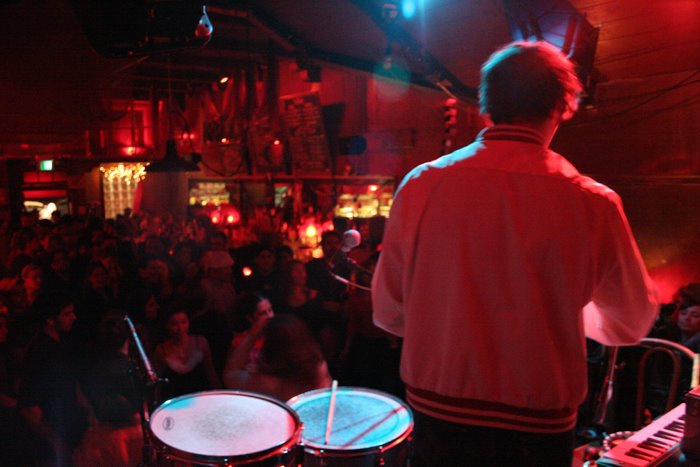
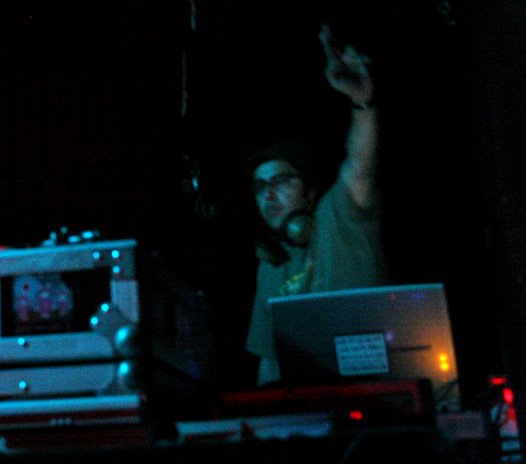
The special agent k brought in his trusty (and newly repaired!) analogue delay box for this round of heavyweight sounds, dubbing out his set live (with some nice, new samples from "Life in Debt"). He started out with some sublow sounds, progressed through some roots and steppers, took a turn through some bhangra, and ended with some dubstep, breaks and drum and bass! No pictures of him, but see above for a photo of L'emiere who dropped some melodica and live percussion over his set... And here is the audio and a playlist to match!

link to audio

playlist:

loefah & skream - fearless

linton kwesi johnson - dread beat an' blood

jacob miller - roman soldiers of babylon

various (from african roots act 2) - journey rock

creation rebel - mountain melody

jacob miller - land called home

sugar minott - war is inna dance

kenny knots - watch how the people dance

eight frozen modules - low bite riddim

bandish project - electronik dausa

punjabi hit squad - nachie moranie

punjabi mc - sarwan phuter

saqi - bolian

punjabi hit squad - hai hai

al haca soundsystem - screw

visionary underground - urban uproar

skream - acid people bass

artwork - round sound

jacob miller - forward ever

grooverider - c funk

fernando porto - sambassim


(2) d wurker


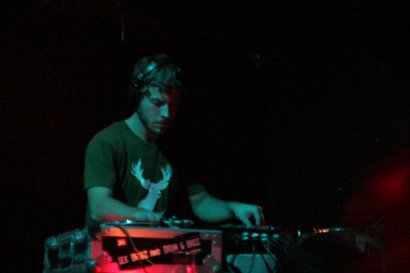
Next, D Wurker rocked a packed dancefloor with his usual buttery smooth mixing dancefloor selections. Again, L'emiere dropped live accompaniment. Unfortunately, we couldn't get my dubwise setup to work over as planned.


link to audio

(3) maneesh the twister, ferhan, and MC daddy frank


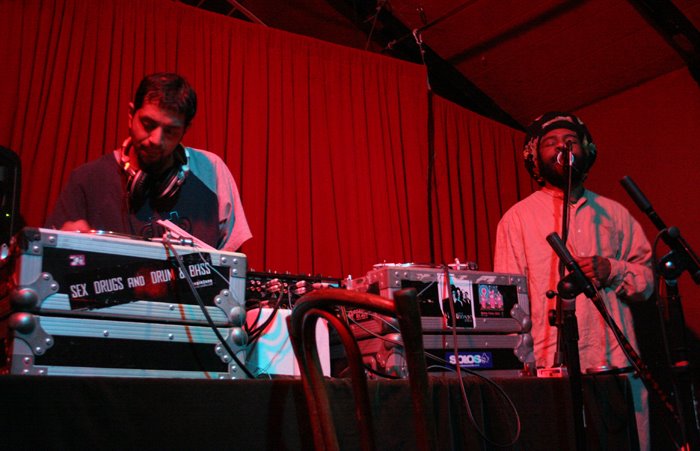
The headliners played a diverse and unique set - with Maneesh on the turntables, Ferhan dropping some wicked tabla bhols, and MC Daddy Frank toasting and freestyling over the mix...

link to audio (soon come!)


(4) tomas palermo and nada

Closing off the night with some nice sounds. Nada dropping samples skillfully over the DJ set. Wicked Lion!

link to audio

Thursday, February 16, 2006

Stateless - 2/24/06 - Soon Come!


Trodding forward with more thick and serious sounds to rock the foundations of Babylon, Roots and Wires Hi-Fi and Six Degrees Records present another round of Stateless:

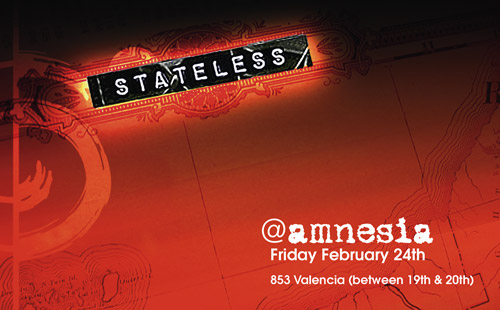
Friday, 2/24/06, starting at 9 PM, again at Amnesia (853 Valencia, between 19th and 20th)...

The special agent k (Roots and Wires Hi-Fi) and D. Wurker (Six Degrees Records) will be dropping opening sets. As usual, the special agent will be playing a wicked selection of roots reggae, lover's rock, outernational dub, UK steppers, bhangra, dubstep, and south asian breaks - all while dropping rootsical samples, playing the siren unit, and tweaking the mixing board in his usual dubwise style... D. Wurker will once again work the crowd into a dancing frenzy, this time with the special agent providing dubwise treatment to his set. As well, Alex (Lemonade), will be playing kit drum and electronics for parts of both their sets.

We also have a special guest for our live performance this go around. Maneesh the Twister (Dhamaal) will be spinning his usual wickedness, with Ferhan on live tabla, and MC Daddy Frank in from NYC on the mic.

Finally, Tomas (XLR8R, Voltage Music) will again join us as guest DJ, but this time with a special guest providing dubwise sounds on keyboards and via effects units.

We will continue in March, this time as part of the Dhamaal Sights and Sounds Festival - stay tuned for more details!

Wednesday, February 08, 2006

Roots and Wires Hi-Fi Delhi Recording Session

More details are soon to follow, but we have another round of Stateless coming to you Friday, 2/24/06 @ Amnesia. We again feature DJ Tomas (XLR8R) as the guest DJ. Maneesh the Twister (Dhamaal) will also drop serious beats, with Ferhan on tabla and MC Frank on the mic. L'emire (Alex from Lemonade) will be playing kit drum and electronics over D. Wurker's and the special agent k's sets. The special agent k will continue to drop rootsical samples, play the siren unit and dub his set live on the board...

Get ready for another evening of raw, bass-heavy, experimental (yet dance-floor friendly) sounds from the Stateless/Roots and Wires Hi-Fi crew... Be sure and check it.

On with the blog posting... The special agent k was married this winter in India. The joyous occasion was itself full of music, with live dholak and bhangra a constant pulse throughout the several days of ceremony...


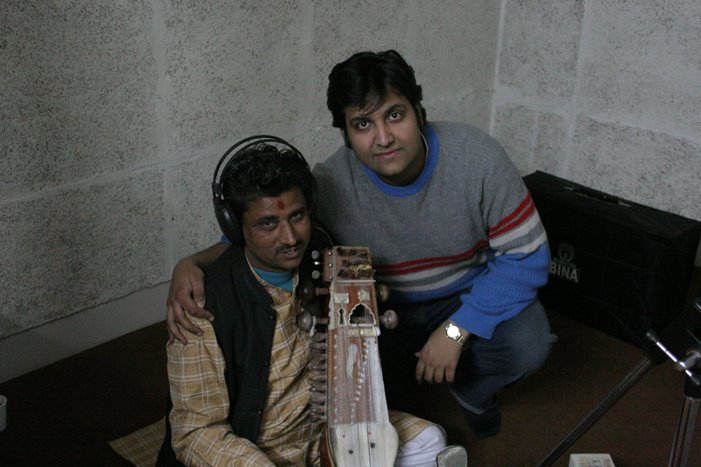
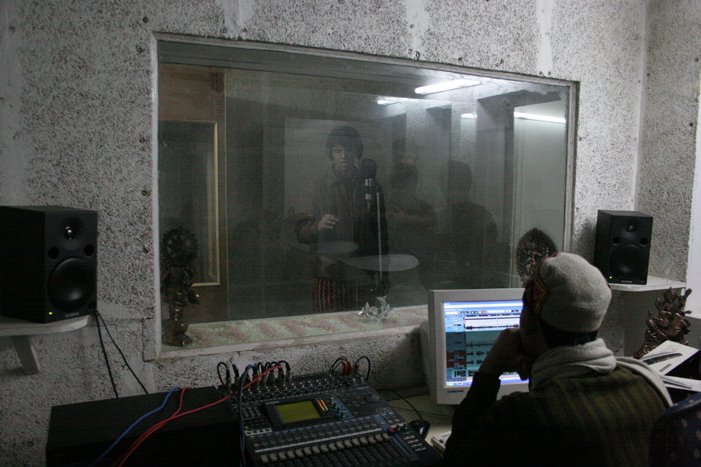
The last day in India was a perfect conclusion to the trip, a significant sonic thread that wove together as part of the larger, synchronistic tapestry of events. We had a full-night recording session with some of India's finest classical musicians... In 2006, Roots and Wires Hi-Fi will be coming to you with original tracks that incorporate dubstep, grime, breakbeat, UK steppers, and dubwise elements - organized around virtuosic classical Indian compositions... This won't be any lightweight business (e.g. the usual sample of an instrument looped ad naseum), but will instead aspire to highlight the classical compositions in a deeper manner...


The recording experience itself was a truly wicked experience. My tabla guruji, Vishal (above, on the right), and I have been dialoguing about this project for a few years. I've introduced him to everything from Asian Massive artists such as Karsh Kale, to UK steppers artists like Jah Warrior, and even grime/dubstep/sublow producers such as Vex'd and Skream. These sounds have been percolating between us and led to the selection of specific musicians to create the mood we're aiming for with this project. Vishal picked a truly gifted selection of musicians - I felt deeply honored to be in their company and will introduce them now (though wait until you hear the recordings)... We were blessed to have Ghanshyam Sisodia (above, left) record sarangi with us (over dark and gritty grime beats!)...


Preetam Ghosal (above), a top disciple of Ustaad Amjad Ali Khan, brought tears to our eyes with his sarod work. Stay tuned for some wicked jugalbandi between Preetam and Ghanshyam floating over two-step drum and bass breaks...


Finally, Ujwal Nagar, brother to Vishal Nagar recorded some moving classical vocals. Prepare for the next step in classical vocal vs. breakbeat riddims...


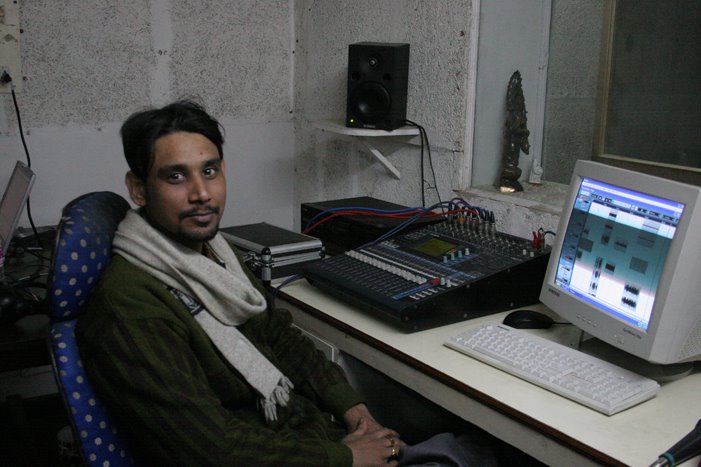
As well, I definitely have to give mad props to sound engineers Dhiman Bhattacharya (above) and Tapan Roy for staying strong until 4 AM!

Anyway, stay tuned for the first Roots and Wires Hi-Fi dubplates. I will probably drop some at the March edition of Stateless... If all goes well, we will then shop the tracks around to various labels afterward... Soon come!

Thursday, February 02, 2006

Stateless - 1/28/06 - Audio Snippets!

As promised, here are some audio snippets +/- playlist info for the last Stateless Event:

(1) Special Agent K (Roots and Wires Hi-Fi) - opening set

link to streaming audio

playlist:

Kazufumi 'Echo' Kodama - Cloud Rack
Karukaya Makato - Family Plan (HAV remix)
Unknown - from Roots and Culture We a Deal Wid
Bitty Mclean - Tell Me
Iration Steppas - No War Dub
Kenny Knots - Run Come Call Me
Selah Collins - Pick a Sound
Manasseh - Bonafide
Kazufumi 'Echo' Kodama - Light and Wind
with Jawaharlal Nehru - Speech
The Mighty Three's - Sinking in the Mist
Kode 9 - Dislokated
with Winston Rodney - Jah no Dead
DJ Abstract - Boozey
with Jawaharlal Nehru - Speech
Freestylers - Bad Boy Love
Horsepower Productions - Special 131

(2) DJ Tomas Palermo (XLR8R, Voltage)

link to streaming audio

playlist unavailable

(3) Lemonade - Live Act

link to streaming audio

recorded off the board - unforunately the drums and bass weren't mic'ed, so the mix is off

(4) DJ D Wurkur (Six Degrees)

link to streaming audio

the minidisc recorder turned off after 30 minutes, so this and my closing set (south asian and ragga drum and bass) are recorded only as memories...

Tuesday, January 31, 2006

Stateless - Mashin' Down the Walls...


Thanks to all that came out and rocked Amnesia this past Saturday - a packed house was treated to some serious beats and live sonics. I will be posting some audio over the next week, so keep checking back...


The special agent k started out with an early set, starting with roots and lover's rock, progressing into UK steppers, and then ending with some dubstep. All with his usual dubwise soundsystem approach - dropping siren sounds, reggae vocals, and even a speech by Nehru, (India's first prime minister) and dubbing it out with tape delays and spring reverb... Hold tight for his dubwise tabla sets which will be coming your way soon...


Tomas took the stage next as our featured DJ, and played some deep and dubby techno and house. I've never been much into house, but this was some spatial and soulful business here. Big up to DJ Tomas for a wicked set.


Lemonade came on next, our featured live act. They are a three person project with vocalist, bassist and kit drummer. It was a sort of Liquid Liquid meets Systemwide type of thing. I seriously enjoyed their set which was nice and raw, both noisy and thick with soul...


D Wurkur played a great set next, one which made the packed dancefloor dance and holler like crazy. I'm bummed that the minidisc player cut off halfway through his set, but it's still a tasty 30 minutes to listen to.


Roots and Wires Hi-Fi selector special agent k closed the evening with some drum and bass, mainly with south asian and reggae elements - including some killer more rockers tracks.

Make sure and make it out to the next Stateless in Febuary. We will have a soon to be announced guest DJ and live act. As well, we are working on getting some visuals going, so stay tuned as 2006 is going to be a good year for the Roots and Wires Hi-Fi sound!

Khenu

Peter Broggs & Dub Creator - Igzabihier Yakal


Carrying on from my Music Beyond Borders show, I wanted to drop a post to highlight a recent album by Peter Broggs and Dub Creator.

For those who are not familiar, Peter Broggs is one of many reggae journey men who have been quietly blessing the world with their beautiful music despite very little in the way of monetary gain. Broggs has been recording since the late 1970s.

I was first exposed to him way back in the mid-1980s when I came across his 1982 album "Rastafari Liveth." It was a revelation to my young ears. More recently, music lovers have been able to hear the reissue of his debut album, 1979's "Progressive Youth." A cracking Roots Radics backed set with Scientist at the mixing boards.

Peter has been championed by the UK digital roots movement as well. In the early 2000s he recorded with the UK's Steve "Jah Warrior" Mosco. Out of this creative firmament came the brilliant vocal album "Jah Golden Throne."

A dub set, "Jah Golden Throne Dubwise," followed on the now defunct BSI records out of Portland, Oregon, USA.

Unfortunately, hard times have befallen Peter as he had a stroke some time ago. All of the revenue from his latest set backed by Amsterdam's Dub Creator and released on the King Shiloh Imprint will go to pay for his medical bills in Jamaica.

I would encourage all lovers of strong digital roots stepping time dubwise to check for this album. At the time of writing EBreggae and ReggaeMusicStore have it in stock.

Peace,
Andy G

Music Beyond Borders Playlist

I am writing this one on a heavy dose of coffee after two hours of sleep. The old 4 AM to 6 AM radio slot that used to be so easy back in the university days is rough in this time.

The show went smooth despite the youth "Quieto" having some problems with his alarm clock. He awoke from his slumber and got to the station just as the second hour began.

The playlist went as follows:

Brian Eno & Harold Budd - Lost in Humming Air
Sacred System - Amrita Flux
Rootsman - Cheb Ragga
Alex Haley - Spoken Word
African Head Charge - Some Bizarre
Orlando Julius & the Afro Sounders - Alo Mi Alo (pts. 1&2)
Mitsuhiro Toike - Landing
Eddie Hazel - California Dreaming
Bollywood Brass Band - Gur Nalon Ishk Mitha
Peter Broggs - Signs of the Times
Dub Creator - Warning Signs dub
Can - Halleluhwah
Bembeya Jazz National - Sina Mousso

And than Quieto's set:

2/5 BZ - Kurtulus Yok
Cameron de la Isla - Al Verte Las Flores Lloran
Daara J - Boomerang
Immortal Technique - Peruvian Cocaine
Nettle feat. Aziz Aridi - Cancion Hip Hop Arabe
Ove Naxx - Man Man Man Man!
Super Etoile de Dakar - Cely
Welmo - La Causa
Ifang Bondi - Saya

You can check the set out by clicking here. Just scroll down to "Music Beyond Borders Tuesday, January 31, 2006 4:00 am." Hope you enjoy the set.

Peace,
AndyG

Monday, January 30, 2006

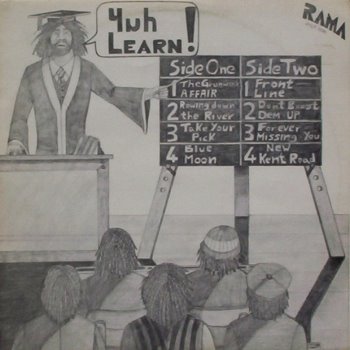
Roots and Wires Returns to the Radio! Yu Learn!!


Roots and Wires return to the airwaves!

On Tuesday 31 January 2006 Roots and Wires sound dimensional selector Andy G will be returning to the airwaves of 90.1 KPFT FM Houston Pacifica radio’s Music Beyond Borders show.

This two hour session will find Andy G selecting a broad range of dubwise and global sounds along side a former student of his. The teacher meets the student in educational sonic conference. No doubt the teacher will become the student when the rolls reverse and Carlos Delclos a.k.a. “Quieto” drops a varied selection of tunes culled from somewhere between Barcelona and the blogsphere.

Quieto is a progressive youth with roots in Spain. Folklorist, activist, travel writer, and cultural commentator are just a few of his many guises. He is an active writer having contributed to Fait POUM! Magazine as a scribe and editor. He also regularly posts on his blog, La Mancha (http://lmncha.blogspot.com <http://lmncha.blogspot.com/> ).

He will be sending plenty of ruff sounds out into the ether: Camaron de la Isla, Ove Naxx, Liebert, Pau Riba, Ghislain Poirier, and Welmo are just a few.

So check it. You can tune in live from 4 to 6 AM Central Time on 90.1 FM KPFT Houston or stream it 24/7 by visiting this link and scrolling down to “Music Beyond Boarders Tuesday, January 31, 2006 4:00 am”

Saturday, November 26, 2005


Sonic Dominance, the Demise of Vinyl, the Mathematics of Bass, and Echoes of “Batty Bwoy” Lyrics in my Head:

Some Disparate, Disconnected, Dubbed Thoughts on the Power of Music

On a recent wander through the shuffle mode of my iPod my ears landed in the middle of a song from an album long lost in another shuffle – that of my CD library. “Bass is Maternal” from Smith & Mighty is a breakbeat dub jaunt through the early 1990s Bristol sound. “Bass is maternal. When it is loud I feel safer” the mc intones repeatedly.

The warmth of bass and its all-encompassing experiential quality have been at the core of many key moments in my and countless others’ everyday experiences. One need only take a quick look at the world of blogs to see its importance.

Khenu recently contributed some reflections “on the nourishing, restorative effects of music and on the various shades of our psychological response to sound and rhythm…”

No doubt, the variegated qualities of sound represent an abiding theme of root and wires.

It is in the spirit of contributing to this thread of musical thought that I run through the following disparate ideas sufficiently open ended for your comments…

>>>>>>>

Julian Henriques writes in his article “Sonic Dominance and the Reggae Sound System Session,”

“Sonic dominance occurs when and where the sonic medium displaces the usual or normal dominance of the visual medium. With sonic dominance sound has a near monopoly of attention. The aural sensory modality becomes the sensory modality rather than one among the others of seeing, smelling, touching and tasting.”

For Henriques the reggae sound system is not only his favorite site to experience sonic dominance, with which I concur, but also the epistemic example of this phenomenon:

“The first thing that strikes you in a Reggae sound system session is the sound itself. The sheer physical force, volume, weight and mass of it. Sonic dominance is hard, extreme, and excessive. At the same time the sound is soft and embracing and it makes for an enveloping, immersive and intense experience. The sound pervades, or even invades the body, like smell. Sonic dominance is both a near over-load of sound and a super saturation of sound.”

For those who have experienced a roots reggae sound system in action it is a feeling like no other. Personally, my encounters with sounds such as Jah Shaka and Entebbe have completely rewired my ears such that even if I listen to music at low volumes sonic dominance is implied. Is this akin to the sensory magnification a blind person may feel as hearing becomes their predominant sense? I like to think so.

The predominant format with which sound systems convey sonic dominance has been the dub plate and vinyl record. Time will tell if the eminent demise of the petroleum by-products used to produce LPs will change this…which brings me to another musical matter on which my ears have been meditating...

>>>>>>>>

This fall I completed a huge project of ripping upwards of 18,000 songs from compact discs to external hard drive and subsequently to an iPod. I am old enough to have experienced every format from LPs To 8-tracks, cassettes to CDs. As such, the novelty of having immediate access to such a sheer quantity of music in the palm of my hand is nothing short of amazing. However, I cannot help but feel a pang of nostalgia for the touch of the CDs and LPs that get a bit less attention as I patch my iPod in and press play. And the sound? Is it the same? With each listen I strain while trying to discern a difference. What has your experience been with this?

>>>>>>>>

The second low-end modality I have been navigating over the course of the last three months is playing bass. I commenced with the process of taking bass lessons in late August. My relationship to and interest in music up to this point in my life has always been one of feeling, emotions, tones, textures, and historical contexts. Since taking bass lessons, I have come to a greater appreciation of music’s connection to mathematics. The tyranny of a metronome teaches you this quickly. Tyranny is too strong a word, for indeed, timing in music is a meditation of sorts. I wake up every morning before work at approximately 5:30 AM. I proceed to strap on my lovely Fender J-Bass and finger pick away. As I roll through the exercises, the previous night’s sleep washes away and the rhythm takes over. The process is frustrating at times, but grounding and calming at its core. I am reminded of Khenu’s mention of the mathematician Pythagorus in his blog post of 19 October. No doubt, as I crack the mathematical code of Louis Bellson’s Modern Reading Text in 4/4 I can see what Pythagorus’s disciples were getting at when they “employed music as medicine, with certain melodies composed to cure the passion of the psyche, as well as ones for despondency and mental anguish.”

>>>>>>>>>

Music also renders its power in the field of culture. In between the ripping of CDs and the playing of bass I have been working on my masters thesis in media studies. I am attempting to analyze the narratives that various claimsmakers utilize in the current global debate over the presence of homophobic lyrics in dancehall reggae. By claimsmakers I am referring to individuals who or organizations that have a vested interest in influencing the debate whether they may be against such lyrics or apologists for the artists that sing the contested songs. This subject is not new to most readers here. However, I perceive a large gap in the current discourse. Too much of the current debate is based on staid narratives that do not open up cross-cultural dialogue. Groups like OutRage often carry on certain racist assumptions that mirror colonial narratives of the past. Meanwhile, some in the so-called reggae fraternity cling to conspiracy narratives that perpetuate a “Naw Bow” position. Ultimately, both sides digress into what Carolyn Cooper characterizes as a “border clash.” I see the opening of a more nuanced cross-cultural dialogue as central to the process of ameliorating the situation for gay and lesbian Jamaicans and, indeed, all homosexuals who are adversely affected by lyrical calls for their death. This will require a much more far-reaching dialogue than is currently being engaged.

A blog for another day….

What is your opinion on the nature of this debate?

>>>>

Post-script: All lovers of heavy Drum and Bass Rub-a-Dub styles must check Mr. Spaulind’s “Twelve Tribes of Israel.” The dub chamber selection of the week! Go Deh!!

Peace,

Andy G

Roots and Wires Set and Sound

Monday, November 14, 2005

Shamans, Individuation, Death and Dying

"All life is bound to individual carriers who realize it... every carrier is charged with an individual destiny and destination, and the realization of these alone make sense of life..."


Carl Jung, from "Psychology and Alchemy"


But first, some ROOTS AND WIRES HI-FI event news – STATELESS will be returning as a monthly next year, this time with a regular live component. The first will be January 28th at Amnesia in the Mission (San Francisco). More details to come soon…

Now back to the main themes - I just returned from a week-long shamanic “pilgrimage” in the Arizona Desert – it was a profound experience, one which deepened my awareness of certain transpersonal realities and also provided a moving appreciation of the Huichol healing tradition. In case you are wondering, there were no hallucinogenics or other drugs involved – in fact, these were strictly prohibited by the two shaman elders who led the workshop (Jaichima and Rutury - check this link to their website)...

Regarding Native American Shamanism, there are some fascinating accounts in Carlos Castaneda’s books, as well as in Alberto Villoldo’s material, but these stories, read from books, were initially hard to believe literally, especially when filtered through my skepticism and scientific training. This trip, as well as the personal shamanic work I have been doing over the last few years, has given me experiential validation with regards to some of these accounts. As a simple example of such "transpersonal" experience, there were certain images and symbols that had come to me during my personal meditation. These images hadn’t made sense at the time they were experienced, as they were images that I couldn’t recognize or place. Some of these images, experienced remotely in my minds eye (up to several months ago) literally came into my outer experience during the week.

Fortunately, this wasn’t a become-a-shaman-in-a-weekend thing, but rather a deep meditation on our shadow aspects and experiences, with ritual and ceremony to negotiate them. These were led by Huichol shaman elders and at their request, I can’t share most of the stories or details from the week. Part of this relates to the private, sacred nature of what transpired, and part relates to their experiences of being exploited over the years. This cautiousness is also superimposed on the deeper exploitation experienced by the Native Americans and Indigenous people. It was infuriating to hear some of their stories of violence directed towards the Native American people, as well as their ongoing experiences with racism (being called primitive, and even spat on).

As Jaichima shared, one theme that was especially touching is best expressed by the first words spoken by Huichols to their newborn: “Please teach us who you are.” How beautiful an ideal is that, to try to learn what the child's path is on its own terms, rather than trying to impose something from parent to child! This is closely paralleled by the Jungian idea of Individuation (see the quote at the top of this posting). The timing of learning this parallel ideal was especially synchronistic for me. Intending to apply this Fall for psychoanalytic candidacy, I had just attended an “open house” at the Jung Institute. The main theme expressed at the "open house," was that the Institute really supports the analysts-in-training in finding their own voice - not on becoming a “Jungian,” or rigidly internalizing certain theories. It really made it clear to me that this training is going to be part of my own path.

Another touching theme, was the Huichol's deep reverence for the earth, with a deep connection with animal and nature spirit in both physical and transpersonal realms. I remember once, when I was being led in ceremony (to the rhythm of a kaicha or rattle), I started to see a certain animal in my mind’s eye. Later, when I was discussing this experience, I was told that the animal I had seen was associated intimately with that particular ceremony. I didn’t know this beforehand, which gave me the sense that this was some sort of autonomous entity in the collective psyche. It reminds me a bit of Carl Jung’s position on ghosts – at first he viewed these solely in terms of projected complexes, later as “autonomous complexes” in the collective psyche, and finally as actual entities. There were also plenty of stories which involved powerful direct contact between human and outer, physical animals…

Music and rhythm came up as a major component of the healing work – the incantations were sang in melody, the kaicha’s (rattles) and drums provided rhythmic soundtrack, and there was also the sound of silence, at times when we weren’t speaking, at least verbally. In the Huichol belief, the Earth spins on a musical axis - it amazes me how many creation myths and cross-cultural cosmologies identify music as foundational.

During the week, I also had many conversations with the Elders and with other participants (many of whom were more a family than anything, with most having come regularly for 15-20 years), about working with the dying process…

A sad and ironic deficit in most allopathic medical training, at least in my experience, is that we don’t get much training or modeling of how to deal with death and the dying process. There are the impersonal and mechanical “morbidity and mortality” conferences in which the deceased are discussed primarily in medical terms. The emotional experience of providers is dissociated – the personal stories and the human experience often aren't part of the mix.

This really reflects a larger existential anxiety when it comes to death. It’s something we’re really not comfortable sitting with in much of “Western Culture,” if you allow me to use this construct and generalization to make a point. We don’t often celebrate people’s passings with dance and song (in addition to the necessary mourning). Instead, in a culture often focused on maintaining and prolonging our lives, it makes us anxious – we distance ourselves from reflecting upon death and engaging with those in the process of dying. Thus, patients that are dying and have no families to visit, can easily end up ignored at a time that human contact is vital.

So it becomes easy to rationalize walking by the room and doing “rounds” quickly. There’s seemingly nothing changing, so the team often steps in briefly once each day to ask if there’s any pain, and if the person can answer clearly, this physical pain is hopefully addressed (but how about psychic pain or existential distress?). If not, perhaps you step in and out in a minute or two. There’s such an emphasis on ‘doing something’ in terms of administration of medication or mechanical intervention. Maintaining life often becomes the only outcome designated a success. When there is nothing to offer in terms of mechanical intervention and when the condition becomes terminal, there can often be a sense of failure or helplessness.

When working with people who are dying, it also forces us to reflect on our own mortality, or personal experiences of loss. This causes anxiety and often leads to distancing – if you run away and don’t have to face it, the anxiety drops, but with a huge cost to those who are dying (as well as to their families). Anyway, I’ve really appreciated how important it is to offer some substantial human presence and listening at the end of life. This is even more true for those who have impoverished social networks, as do many of the homeless seen in the public hospital setting. In addition to simply offering your presence, it is often important to explore the fears and fantasies around death and the mystery afterward…

With regards to music, I think that offering personally significant music can also be valuable. I remember one man who had requested a certain CD, to play on a CD player we had checked out to him. He became delirious towards his life's end and was no longer responsive to conversation. He was incredibly agitated. When I brought him that CD, played it through his headphones, he calmed down and had a smile which he carried into his transition. It was really moving for me…

Anyway, with all this in mind, I'm thinking that it would be great to organize some sort of seminar/conference, with a strong experiential component, that addresses cross-cultural approaches towards death and dying. It’s a culturally diverse city, and our public hospital, public health care system, and medical training need to encourage more dialogue and training around these issues, as well as implement more of a system to address these often neglected psychospiritual needs of the dying and those caring for them... Let me know if you all know of anything along these lines in the public hospital setting, or if any of you have any thoughts!

- Khenu


Wednesday, October 19, 2005

Sonic Rejuvenation

The last few weeks have been held together by wonderful and deeply synchronistic threads. (I've also seen some wicked shows - big up to the Al-Haca Soundsystem for a killer set, featuring mad poetry by the mc and thundering basslines that would make Shaka proud). Much of these interwoven experiences have related to creativity and music. As part of this, I've been reflecting a bit on the nourishing, restorative effects of music and on the various shades of our psychological response to sound and rhythm...

Let me set a bit of context. As part of my UCSF faculty appointment, I work as a psychiatrist in an outpatient program serving a population that is primarily homeless. These individuals are pretty much considered among the most challenging to engage with - beyond the destabilizing effects of homelessness itself (and as part of its etiology), many of them struggle with severe trauma histories, multiple major losses, major psychiatric conditions, drug addictions and years of being unemployed...

The program itself is person-centered and offers medical care, psychotherapy, psychopharmacology, help with housing and financial entitlements (as well as meaningful relationships). It's nice to actually look forward to work (not that I don't ever get weekend blues on a monday morning!) - I feel rather blessed with this opportunity to work with this population (and also with a spectacular group of social workers and other providers). In the midst of this program, we've started a weekly Music Therapy group, which has evolved into the program's most popular group (which more than anything, seems a testiment to a central role of music in our lives, even when we've forgotten this)...

Let me circumabulate a bit, starting with a quote:

Pythagorus considered that music contributed greatly to health if used in the right way... He called the method musical medicine... In the spring he would sit in the middle of his disciples who were able to sing melodies and play his lyre... His followers would sing in unison certain chants which were melodious and rhythmical... At other times his disciples employed music as medicine, with certain melodies composed to cure the passion of the psyche, as well as ones for despondency and mental anguish. There were melodies for anger and aggression and all the psychic disturbances...

As quoted from Iamblichus, 4th century Greek philosopher

My tabla ustaadji was in town recently, another wonderful thread in the mix. I've been studying with Vishal for some years, he's a virtuosic player who even dreams in tabla bhols (the object-relations of tabla playing will be the subject of another post!)... He lives in New Delhi for most of the year, but comes to Seattle for 2-3 months to teach and perform across the US (check a stream of our own non-classical soundsystem collaboration here!). In resonance with the quotation above, Vishal told me the older generation of Indian classical musicians would share stories of specific raga's being used to treat specific physical diseases and psychological conditions!

Even in contemporary scientific literature, Music has been shown to have multiple positive effects - it's been shown to improve a variety of psysiological parameters (blood pressure, heart rate, etc...), enhance immune functioning, reduce anxiety, improve mood and it's even been shown useful in a spectrum of psychiatric illness. Of course, these studies miss the more nuanced, personal ways in which music can effect us - including the capacity of music to connect us with repressed or dissociated affect and even as a pathway to communicate with some core aspect of our Being or Nature (check this great article for a Jungian perspective - "The Goal as Process: Music and the Search for Self").

This may be a bit hard for some to digest, but let me share a few examples from the literature (with links to abstracts): In one study, music was shown effective in augmenting conventional treatment for people hospitalized for depression. There is a study which has demonstrated improved outcomes for individuals with Alzheimer's Dementia treated with Music Therapy, with decreased agitation and even improved cognitive measures. If you're interested in reading more along these lines, I would definitely recommend "Sounds of Healing," written by the Cornell Oncologist, Mitchell Gaynor.

Now back to the Music Group... Though each person (I don't like either "client" or "patient" when referring to the individuals engaged with our program) relates and draws from the group in their own way, an overarching goal has been to cultivate a mindful awareness of how different sounds, rhythms and music effect us. We've also aspired to create a space where participants can cultivate a sense of play, as well as nurture their creative aspects. We've also attempted to cultivate the idea of music as active imagination, or a means of dialogue with our Self, or Soul.

The format has been pretty improvisational, initiated by a few brainstorming sessions, and then drawing from ideas and inspiration that find us through various avenues (an overall process that is not too unlike the approach to jazz and indian classical music performance). Over the 10-12 sessions we've had, some structure has evolved and now we usually start each group with an open invitation to share experiences with sound and rhythm in the prior week. This is followed by a mindfulness meditation, which focuses on the breath and also incorporates humming/toning.

The remainder of the group varies. We've done a good amount of listening - covering Soul, Jazz, Delta Blues, Indian Classical, Western Classical, Roots and Dub Reggae, Hip-Hop, Afrojazz, and even Breakbeats and Ragga Jungle! We've done visualization and toning meditations that focus on compassion and forgiveness. We've held rhythm circles with found objects (as there is potential for sound in most everything - as well, most of the client's can't afford actual instruments). People have been invited to put music or emotional responses into movement - with a hope of bringing soma, or body, back in from the margins.

Overall it's been moving. I've been blessed to learn from my fiance, who is studying expressive arts therapy! I certainly don't feel that we received much exposure to the incorporation of expressive arts modalities (such as music and movement) in my residency training. I feel pretty empassioned about integrating these into my work and have fantasies of playing some small part in integrating these approaches more and more into our public mental health system. I feel the same way about Jungian and contemporary psychodynamic work, which doesn't have as much presence in this public setting (in contrast to cognitive behavioral psychotherapy and psychopharmacology) - this will be the subject of a future post (and a paper I'm working on - "Jungian Dream Work in a Public Mental Health Clinic")!

- Khenu